Proudly serving Mesa, Gilbert, Chandler, Tempe, Queen Creek, Scottsdale & surrounding areasCall or Text 24/7: 602-559-1623
Aerial drone photo of residential neighborhoods and desert vegetation in Mesa, AZ.

EV Charger Installation in San Tan Valley, AZ for Dedicated Circuits & Repair

Mesa EV Chargers installs Tesla Wall Connectors, NEMA 14-50 outlets, and commercial EV chargers in San Tan Valley, AZ. Our licensed electrical contracting team focuses exclusively on EV charging infrastructure. We also handle dedicated circuits, hardwired chargers, panel upgrades, and charging equipment repairs. From a home garage to a shared parking area, we assess the electrical service before recommending an installation.

Charging an EV adds a sustained electrical load alongside your pool pump, HVAC system, and other household equipment. San Tan Valley's desert heat makes conductor sizing, outdoor materials, and secure connections especially important. We inspect your panel, plan the circuit route, and explain any electrical modifications before work begins. Contact us for an on-site assessment and a written proposal suited to your property.

Our local coverage includes Johnson Ranch, Ironwood Crossing, Skyline Ranch, Circle Cross Ranch, San Tan Heights, Copper Basin, and communities around Bella Vista Farms. We also serve Queen Creek, Florence, Coolidge, and surrounding northern Pinal County communities.

★ ★ ★ ★ ★4.9/5 Customer Rating - 19 Years of Electrical Experience - 2,000+ Charging Projects Completed - Licensed, Bonded & Insured - Serving Homes, Fleets & Businesses
Charging Services

EV Charger Installation and Repair Services

Choose a charging setup around your vehicle, parking location, and available electrical capacity. We install equipment for homes, commercial properties, fleets, and multifamily communities, with repair and replacement options for existing chargers.

Tesla Wall Connector Installation

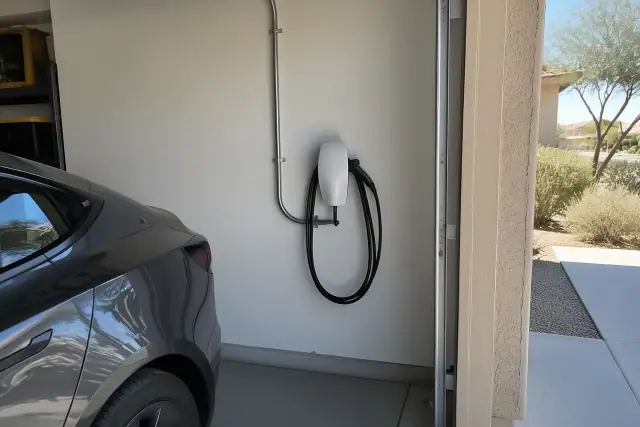
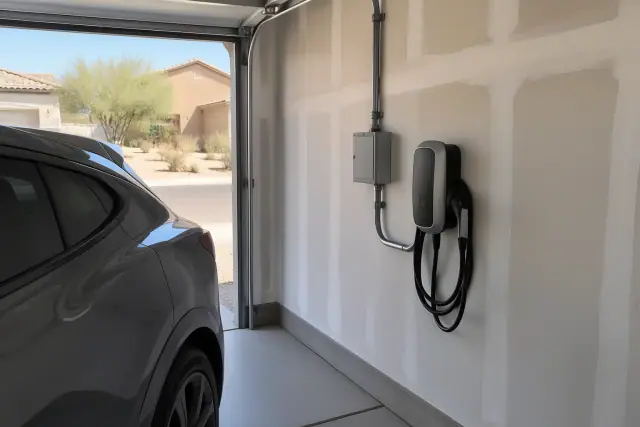
Tesla Wall Connector installation on a drywalled garage wall with conduit in San Tan Valley, AZ.

A Tesla Wall Connector provides hardwired home charging with output of up to 48 amps continuous when the electrical service supports it. We size the breaker and conductors, select a practical mounting position, and follow Tesla's installation specifications.

Explore Service

NEMA 14-50 Outlet Installation

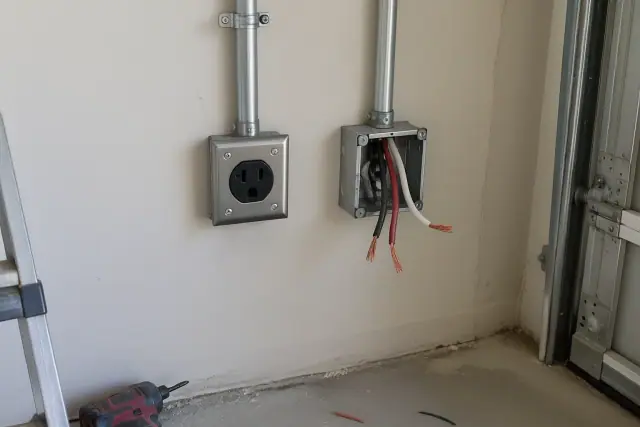
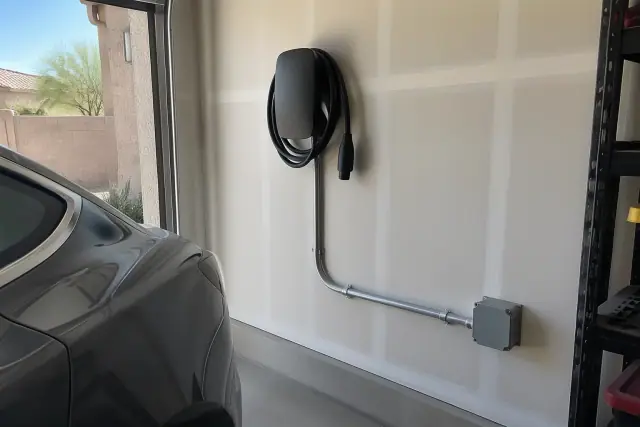
NEMA 14-50 outlet installation with exposed conduit in a garage in San Tan Valley, AZ.

A NEMA 14-50 outlet supports the Tesla Mobile Connector or a compatible portable EVSE. We install a dedicated 50-amp circuit, provide GFCI protection where required, and position the outlet to keep the charging cord manageable.

Explore Service

Commercial EV Charger Installation

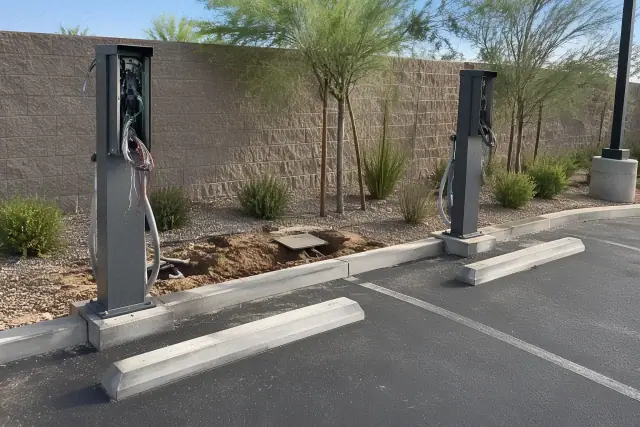
Contractor progress photo of commercial EV charger installation in San Tan Valley, AZ.

Retail properties along Hunt Highway and businesses near Ironwood Road need charging capacity suited to customers and employees. We install single pedestal chargers or multi-port arrangements and evaluate service capacity and load management before specifying upgrades.

Explore Service

EV Charger Repair & Troubleshooting

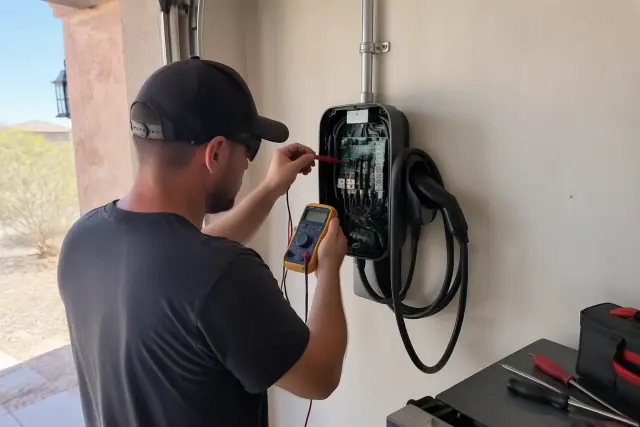
Technician troubleshooting an EV charger on a drywall wall in San Tan Valley, AZ.

Intermittent charging, breaker trips, and connectivity faults need a diagnosis across the panel, circuit, and charger. We check for loose terminations, failed contactors, GFCI issues, and firmware problems before recommending repairs or replacement.

EV Charger Panel Upgrades

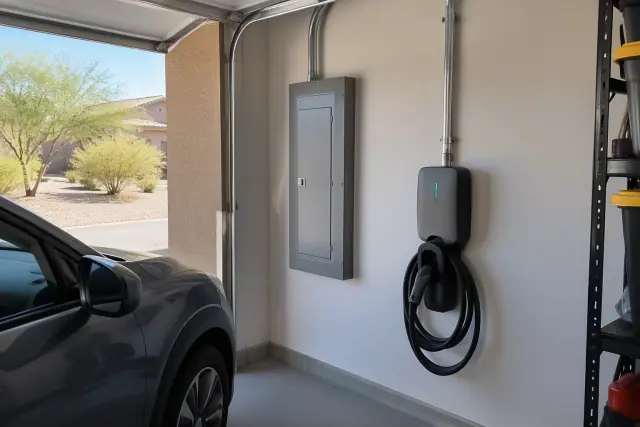
EV charger panel upgrade with hardwired conduit in a San Tan Valley, AZ garage.

When a load assessment shows insufficient capacity, we can upgrade a 100-amp service to 200 amps or add a subpanel where appropriate. Utility disconnect and reconnect coordination is included when the project requires a service upgrade.

EV Charger Dedicated Circuit Installation

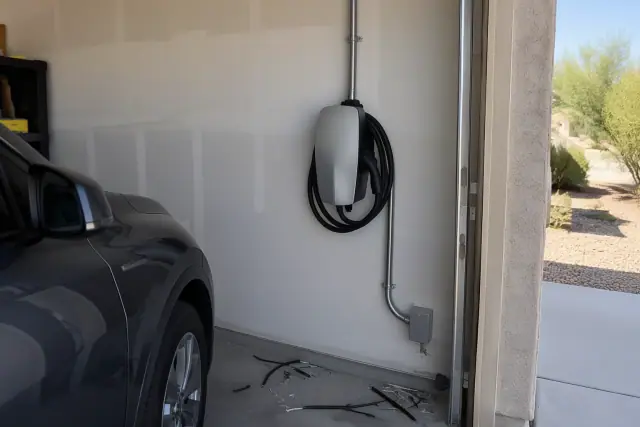
Wall-mounted EV charger and electrical conduit installed in a garage in San Tan Valley, AZ.

Each charger receives its own dedicated circuit with no shared appliance loads. We size the wiring and breaker for the equipment's continuous demand and the panel's available capacity, rather than relying on an unused breaker space alone.

Hardwired EV Charger Installation

Hardwired EV charger installation on a drywall wall in San Tan Valley, AZ, with exposed conduit.

A hardwired charger connects directly to its dedicated circuit without a plug and receptacle. Removing those connection points reduces a source of wear and heat buildup during repeated daily charging, particularly for equipment operating at 40 amps or more.

Fleet EV Charging Station Installation

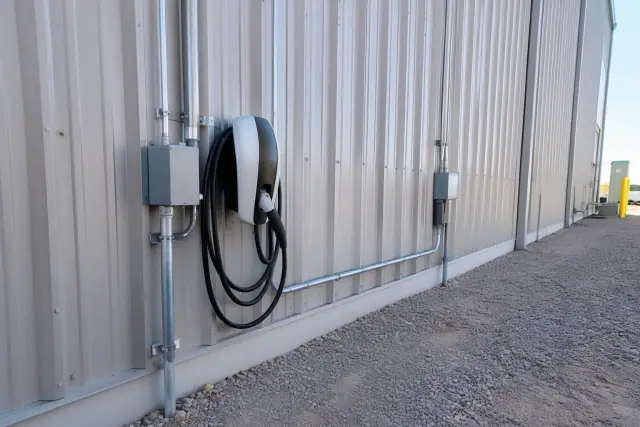
Fleet EV charging station installation on a metal building wall in San Tan Valley, AZ.

Delivery and service fleets need multiple charging points without exceeding the site's electrical capacity. We plan charger placement, staggered charging cycles, and load management around the depot's usage patterns and total demand.

Multifamily & Apartment EV Charger Installation

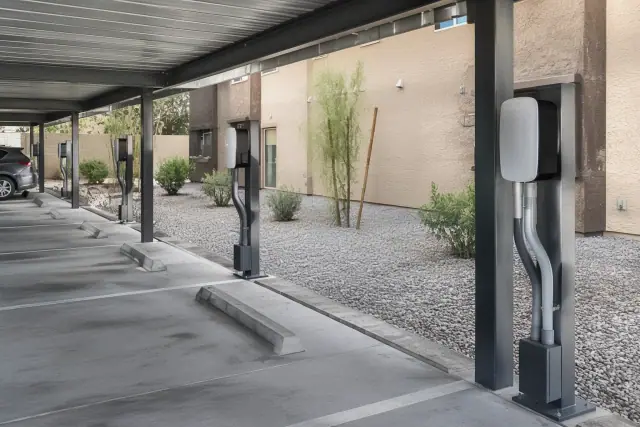
EV charger installation under a covered parking structure in San Tan Valley, AZ.

Shared residential charging can serve assigned parking spaces or common resident parking areas. We work with property managers on individual metering or submetering options and phased installation plans for apartment and multifamily properties.

EV Charger Replacement & Upgrades

EV charger replacement and upgrades on a drywall wall with conduit in San Tan Valley, AZ.

When a charger is no longer economical to repair, we assess replacement equipment and the circuit that supplies it. Existing wiring can be reused when it remains suitable and compliant; needed electrical changes are included in the replacement scope.

Plan Your Installation

Choose the Right EV Charging Setup

The right equipment depends on how you charge, where you park, and how much electrical capacity your property has available. Compare these practical details before committing to a charger or a circuit layout.

Match the Charger to Your Vehicle

We install equipment for Tesla, Rivian, Ford, and other EVs. Charger selection starts with the vehicle's connector requirements and whether a Wall Connector, portable EVSE, or another Level 2 unit fits your daily use.

Check the Panel's Available Capacity

A 200-amp panel and an older 100-amp service need individual load assessments. We account for existing demand from air conditioning, pool equipment, and other appliances before choosing the charging output.

Compare Portable and Hardwired Charging

An outlet gives you flexibility to use compatible portable equipment, while a hardwired unit removes the plug connection from the charging circuit. We explain how each option fits your equipment and everyday parking routine.

Plan the Cable and Conduit Route

A garage wall near the panel creates a different installation scope from a driveway, carport, or detached workshop. Stucco, masonry block, stud-frame walls, and the distance to the charger all influence the route and work involved.

Specify Materials for Outdoor Charging

Exterior installations use outdoor-rated enclosures, UV-resistant conduit, and corrosion-resistant hardware. Equipment placement and material selection account for prolonged sun exposure at San Tan Valley properties.

Review an Itemized Installation Proposal

Compare the complete scope: equipment, conductor sizing, breaker requirements, mounting location, permitting, and inspection. We provide pricing before work begins so panel modifications and longer conduit runs are part of the discussion.

San Tan Valley Charging Issues

Common EV Charging Problems

Heat, sustained electrical demand, and aging connections can expose weaknesses that appear only while a vehicle is charging. Our troubleshooting checks the supply circuit and charging equipment together to identify the actual cause.

Request Charger Troubleshooting

Charging Faults During Summer Heat

Desert heat can put extra stress on breakers and terminations during a long charging session. If charging becomes intermittent during hot weather, we assess the circuit, connections, and equipment under load.

Breaker Trips Under Full Load

A trip during charging may involve circuit capacity, a connection problem, or a protective device. We test the panel and charger supply rather than assuming that changing the charger will resolve the fault.

Limited Capacity in an Older Panel

Homes built during San Tan Valley's 2005 to 2020 growth period may have panels sized for the household loads expected at the time. Adding a continuous charging load of 40 to 48 amps alongside a pool pump and dual-zone HVAC calls for a load calculation.

Loose or Worn Charging Connections

Repeated thermal cycling can loosen terminations, while a worn NEMA 14-50 receptacle may show arcing or heat damage. We inspect the affected connection and assess the circuit before choosing a repair.

WiFi and Firmware Interruptions

A networked charger can have connectivity dropouts or firmware faults even when its supply circuit is working. Diagnosis separates communication problems from electrical faults so the proposed fix addresses the symptom.

Aging or Failed Charger Components

Failed contactors and recurring internal faults can make charging unreliable. We compare the condition of the unit and the repair scope before recommending component work or a replacement charger.

EV Charging Expertise

Why Choose Mesa EV Chargers

Our licensed electrical contracting team works exclusively on EV charging infrastructure. That focus carries through the load assessment, equipment selection, wiring, troubleshooting, and final testing for your property.

Address-Specific Permit Coordination

We check the permitting authority that governs your parcel and coordinate the required electrical permits and inspections. That address-specific review matters across San Tan Valley and nearby unincorporated parts of Pinal County.

Electrical Planning for Desert Heat

San Tan Valley summers bring air temperatures exceeding 110 degrees and pavement temperatures above 150 degrees. Our conductor sizing accounts for ambient heat using NEC 310.15 correction factors, alongside the equipment and installation requirements.

Testing Before the Job Is Finished

We follow manufacturer conductor sizing and torque specifications, then test the charging circuit under load. The installation is checked as a working electrical circuit before the project moves through its required inspection steps.

From Assessment to Charging

Our EV Charger Installation Process

A clear scope starts with your existing electrical service and ends with a tested charging circuit. We explain the equipment, route, approvals, and inspection needs before scheduling the installation.

01.

Inspect the Panel and Parking Location

At the site visit, we inspect the electrical panel, check breaker space, and identify where the vehicle will charge. We review the proposed circuit route and any detached garage or workshop power requirements.

02.

Calculate the Charging Load

We compare the charger's demand with the service capacity and existing household loads. The assessment determines whether the project can use the existing panel or needs an electrical upgrade.

03.

Review and Approve the Scope

You receive a written proposal covering the circuit, equipment mounting, and any panel or subpanel work. We discuss the price and installation options before you approve the project.

04.

Coordinate Permits and Scheduling

After scope approval, we arrange the required permit and schedule the work. Where a panel upgrade requires a service disconnect and reconnect, we coordinate that part of the project with the property's utility provider.

05.

Install the Circuit and Charger

We run the planned conduit and conductors, install the dedicated circuit, and mount the charging equipment. Connections follow the manufacturer's specified torque and conductor requirements for the selected configuration.

06.

Test Charging and Complete Inspection

We test the completed circuit under load and check the charging equipment's operation. Required inspection steps are coordinated with the applicable building authority to close out the installation.

Property Applications

Charging Options for Homes and Businesses

Case Study 1: Home garages: A Wall Connector can put daily charging where you park, with output matched to the available electrical service. When the panel lacks headroom, an upgrade or other appropriate electrical modification becomes part of the plan.

Case Study 2: Commercial parking: Retail centers and office properties can add customer or employee charging with circuits planned around daily use. Load management helps coordinate multiple ports within the site's available capacity.

Case Study 3: Multifamily communities: Shared chargers, assigned parking installations, and metering options give property managers different ways to serve residents. A phased rollout can organize the work around the property's electrical service and parking arrangements.

Plan Your Charging Project

Schedule Your EV Charging Assessment

For residents commuting into Chandler, Gilbert, or Phoenix, AZ , charging at home can become part of the daily routine. Tell us about your vehicle, panel, and parking location so we can assess a Wall Connector, portable charging outlet, or other EV charging installation. Call Mesa EV Chargers or request an estimate to arrange a site visit.

Installation and Repair Questions

EV Charger FAQs for San Tan Valley, AZ

Get answers about Tesla Wall Connectors, charging circuits, installation scope, and repairs. Equipment selection and the final price depend on the electrical assessment at your property.

Call Our Experts

Installation cost depends on panel capacity, circuit length, and the route to the charger. A short run from a suitable panel generally requires less work than a long conduit route through block walls or a service upgrade. We provide a firm quote after the on-site assessment so the scope and price are clear before work begins.

The installer needs to understand the unit's current settings, conductor requirements, torque specifications, and EV supply equipment requirements in NEC Article 625. Our licensed team works on EV charging infrastructure daily. Ask about specific charging equipment experience when choosing a contractor.

The equipment purchase and the electrical installation are separate parts of the overall cost. Our itemized quote covers equipment, labor, permitting, and inspection, along with any required panel or subpanel work. The site assessment establishes the circuit length and modifications needed for your installation.

A straightforward garage installation with adequate panel capacity and a short wire run typically takes two to four hours. Longer conduit runs, masonry work, or a panel upgrade can take longer and may require multiple visits. Utility coordination for service work can add scheduling time beyond the physical installation.

We check which permitting authority governs your address before starting the project. Our installation process includes obtaining the required electrical permits and coordinating inspections for the approved scope. This review accounts for properties handled by the town or Pinal County.

A common configuration uses a 60-amp breaker for 48-amp continuous charging, reflecting the 80 percent continuous-load sizing relationship. The correct configuration depends on the equipment requirements, available panel capacity, and the load assessment. We select the circuit and charger setting together for your property.

Yes, a properly installed NEMA 14-50 outlet can support compatible portable EVSE, including the Tesla Mobile Connector. It provides flexibility when changing compatible charging equipment. A hardwired installation removes the receptacle and plug connection, which can be useful for repeated daily charging.

Level 2 charging operates at 240 volts and can add roughly 20 to 40 miles of range per hour, depending on the vehicle and charging amperage. Circuit sizes in our installation scope range from 30 to 60 amps, selected for the charger and available panel capacity. We assess the electrical service before recommending an output setting.

An older panel does not automatically require replacement, but available breaker space alone does not establish capacity. We evaluate the service and existing loads, including air conditioning and pool equipment. If capacity is insufficient, the proposal explains whether a panel upgrade or an appropriate subpanel arrangement is needed.

Yes, our residential work includes garage, carport, driveway, and exterior-wall installations. Outdoor equipment uses suitable enclosures, UV-resistant conduit, and corrosion-resistant hardware. A detached garage or workshop may require subpanel work or a longer circuit route, which we assess during the visit.

Yes, we install charging equipment for Rivian, Ford, and other EVs as well as Tesla vehicles. We match the equipment and connector type to the vehicle and review the circuit requirements. The site proposal identifies the charger, mounting position, and electrical work.

We consider parking layout, daily users, charging schedules, and the site's electrical capacity. Fleet projects can use staggered charging cycles and load management to coordinate multiple charging points. Commercial proposals account for customer or employee demand and any service modifications required.

Multifamily projects can include individual metering or submetering options to support allocating charging costs by unit or tenant. We review those options with property management when planning assigned or shared parking chargers. Installation can be phased to suit the property's layout and electrical scope.

Possible causes include loose terminations, GFCI faults, a failed contactor, heat-related problems, or issues within the supply circuit. Networked chargers may also have firmware or WiFi faults. We test the panel, circuit, and equipment to identify the cause before recommending work.

Replacement becomes an option when a charger is beyond economical repair, including some units after 8 to 10 years of daily high-amperage use. Age alone does not determine the decision; the diagnosed fault and equipment condition matter. We also assess whether the existing circuit can remain in use or needs modification.