Proudly serving Mesa, Gilbert, Chandler, Tempe, Queen Creek, Scottsdale & surrounding areasCall or Text 24/7: 602-559-1623
Aerial drone photo of residential neighborhoods and desert vegetation in Mesa, AZ.

EV Charger Dedicated Circuit Installation in Mesa, AZ for Safe 240V Home & Business Charging

Mesa EV Chargers installs dedicated EV charger circuits for homes and properties in Mesa, AZ. We handle hardwired charger connections, Tesla Wall Connectors, and NEMA 14-50 outlets. Our electricians also assess panel capacity, upgrade electrical service when needed, and troubleshoot existing charging equipment.

Mesa homes range from 1970s ranch properties in Dobson Ranch with 100-amp panels to newer Eastmark homes with 200-amp service. That difference affects how much charging load a property can support. We begin with a load calculation and plan the wiring around your charger, the circuit route, and the available capacity.

Our licensed electricians install UL-listed EVSE equipment, handle permits for applicable work, and verify charging output with a load test. An on-site evaluation gives us the details needed to provide a fixed quote.

Mesa EV Chargers provides EV charger dedicated circuit installation in Mesa, Tempe, Chandler, Gilbert, Queen Creek, and Apache Junction.

★ ★ ★ ★ ★4.9/5 Customer Rating · 19 Years of Electrical Experience · 2,000+ Charging Projects Completed · Licensed, Bonded & Insured · Serving Homes, Fleets & Businesses

Dedicated EV Circuit Options & Benefits

What Is a Dedicated EV Charger Circuit?

A dedicated circuit connects one breaker to one outlet or hardwired charging point through its own wiring run. It serves the EV charger alone, so garage lights, shop equipment, and household outlets do not share its load.

EV charging is treated as a continuous load when it lasts three hours or more. NEC Article 625 addresses EV charging installations, including circuit sizing at 125% of the charger's rated continuous amperage. We check the equipment requirements before selecting the breaker, conductors, and conduit.

The right circuit depends on the charger's maximum output, the distance from the panel to the parking space, and the home's remaining electrical capacity. A nearby garage connection and a detached carport can require different routing, wire sizing, and disconnect arrangements.

Benefits of a Properly Sized Charging Circuit

A circuit designed for your charger supports sustained charging without sharing capacity with unrelated outlets. The installation also gives you a clear record of the electrical work and a route for discussing future charging needs.

  • Charging equipment served by its own breaker and wiring
  • Breaker capacity matched to the charger's continuous draw
  • Wire and conduit selected for run length and installation conditions
  • Panel capacity checked before a new load is added
  • Hardwired or outlet-based connections suited to your equipment
  • GFCI protection and disconnects included where required
  • Permit and inspection documentation for applicable work
  • Future vehicle or second-EV needs considered during planning
From Panel to Parking Space

EV Charger Circuit Installation Services

We plan the electrical connection around the equipment you want to use and the property where it will charge. Our work covers residential circuits, panel upgrades, shared parking installations, and repairs to existing charging connections.

Dedicated Circuit Installation

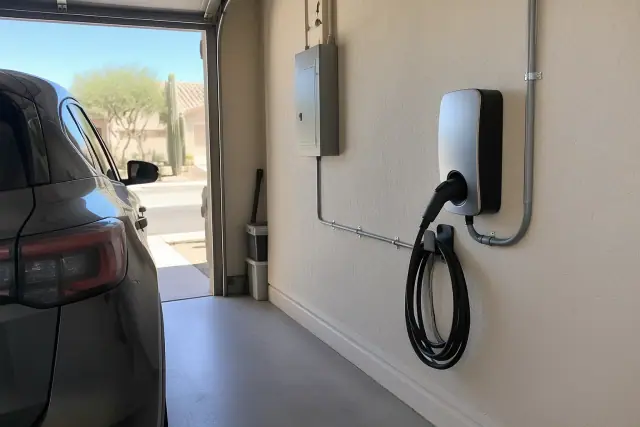
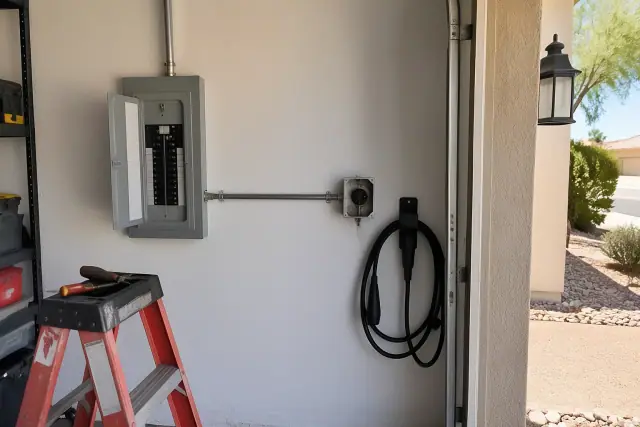
Technician photo of EV charger dedicated circuit installation in a Mesa, AZ residential garage.

We install a separate wiring run from the electrical panel to your chosen charging location. Load calculations, conductor sizing, conduit routing, and breaker selection are part of the job, with attention to attic access, exterior walls, and the distance to your garage or carport.

Request Estimate

Tesla Wall Connector Installation

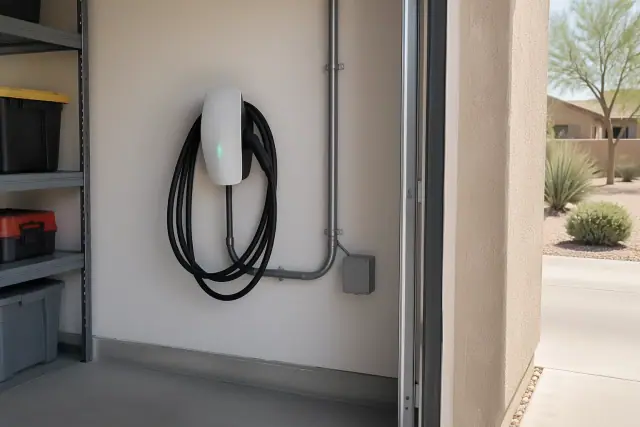
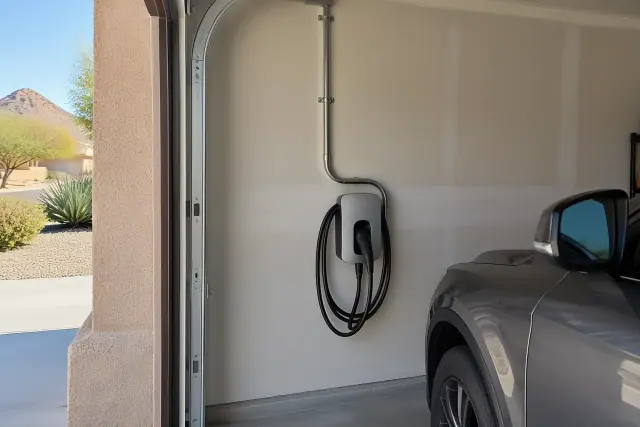
Tesla Wall Connector EV charger installed on a residential garage wall in Mesa, AZ.

We mount and hardwire Tesla Wall Connectors after confirming panel capacity and the available circuit rating. The unit can be configured to a lower supported amperage when the electrical design calls for it. We check the connection and verify output with a load test before completing the installation.

Request Estimate

NEMA 14-50 Outlet Installation

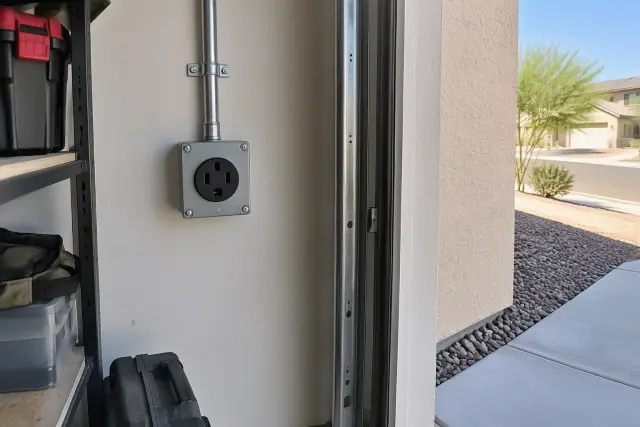
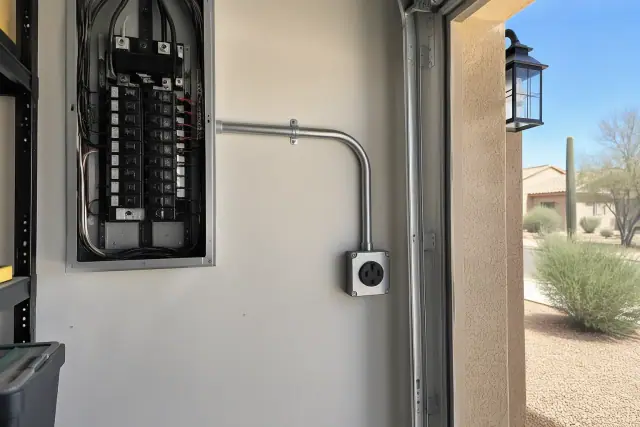
NEMA 14-50 outlet installation with heavy-gauge conduit on a drywall wall in Mesa, AZ.

A NEMA 14-50 is a 50-amp, 240-volt receptacle for compatible plug-in charging equipment. We install a dedicated circuit and an appropriate outlet enclosure, with GFCI protection at the panel for garage and outdoor locations as required. Placement is typically 18-24 inches above the floor or along the exterior wall near the parking space, subject to the installation requirements.

Request Estimate

EV Charger Panel Upgrades

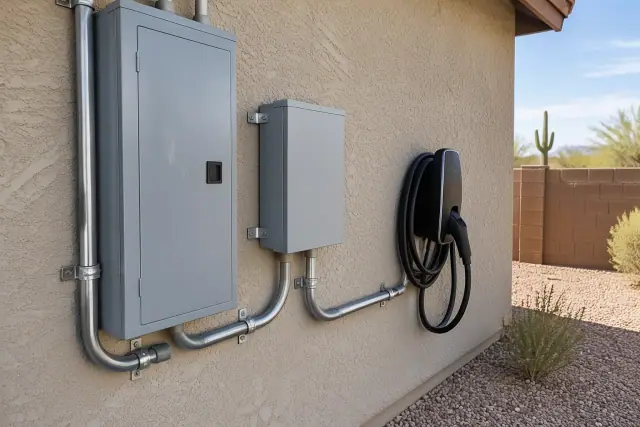
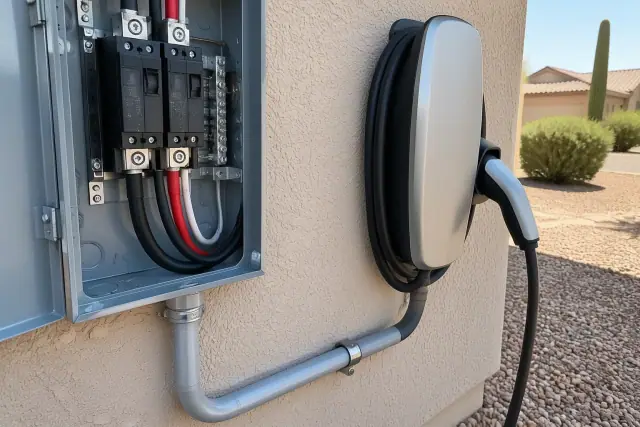
EV charger panel upgrade with heavy-duty conduit on a stucco wall in Mesa, AZ.

Adding a charging circuit can expose a capacity limit in an older electrical service. We use a load analysis under NEC Article 220 to evaluate a home's square footage, appliances, HVAC load, and proposed charger before recommending an upgrade. Where needed, the service work includes utility coordination, permitting, and inspection scheduling.

Request Estimate

Commercial, Fleet & Multifamily Charging

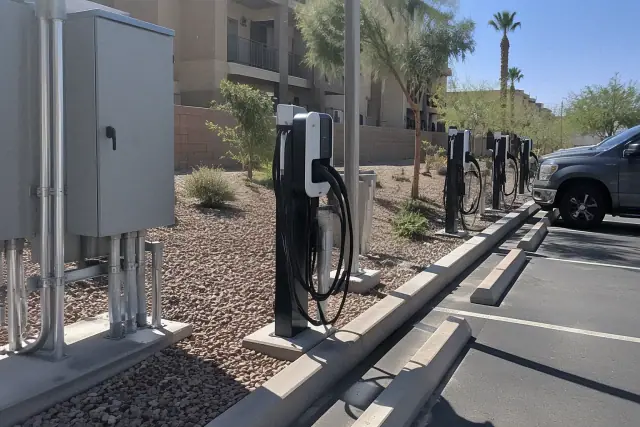
EV charger dedicated circuit installation in an outdoor parking lot in Mesa, AZ.

Business fleets, apartments, and shared parking areas need planning for several chargers on the same service. We assess load management, electrical room access, and submetering or cost allocation, then coordinate the scope with property managers and HOA boards. Projects in areas such as the Fiesta District and Eastmark are designed around the site's existing infrastructure.

Request Estimate

EV Charger Repair, Replacement & Upgrades

Hardwired EV charger installed on a stucco wall in a residential garage in Mesa, AZ.

We troubleshoot charging faults from the panel through the outlet or hardwired connection before checking the charger itself. A damaged cord, loose termination, or failed contactor may be repairable; repeated control-board faults or an obsolete unit may make replacement more practical. Circuit upgrades are assessed alongside equipment changes, including moves from Level 1 to Level 2 charging.

Request Estimate
Match the Circuit to the Charger

EV Charging Circuit Options

The circuit rating and the charger's continuous output are different numbers. These common configurations help explain the options we evaluate; final wire sizing also depends on routing, temperature, distance, and equipment requirements.

EV charger dedicated circuit installation with metal conduit on a drywalled interior wall in Mesa, AZ.

30-Amp Circuits for Lower Charging Demand

A 30-amp circuit can support compatible equipment drawing 24 amps continuously. It may suit lighter daily driving needs, provided the vehicle, charger, and electrical service fit that configuration.

  • 24-amp continuous charger output
  • 30-amp breaker configuration
  • 10 AWG copper as a typical starting point for assessment
  • Vehicle and daily charging needs reviewed before sizing
  • Future charging demand discussed before the route is installed
Request Estimate
EV charger dedicated circuit installation in a residential garage in Mesa, AZ.

40-Amp Circuits for Compatible Level 2 Chargers

A charger configured for 32 amps of continuous output pairs with a 40-amp circuit. We confirm the equipment setting and evaluate the conductor route before installing or reusing the connection.

  • 32-amp continuous charger output
  • 40-amp breaker configuration
  • 8 AWG copper as a typical starting point for assessment
  • Existing circuit condition checked before reuse
  • Panel capacity confirmed for sustained charging
Request Estimate
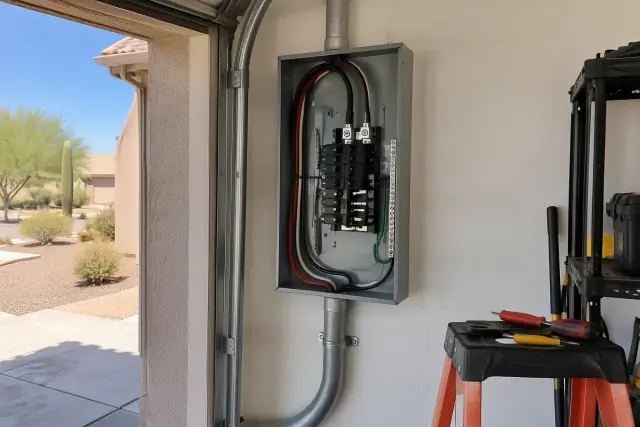
Residential garage interior in Mesa, AZ showing a 50-amp circuit breaker enclosure for an EV charger.

50-Amp Circuits for Plug-In Charging

A 50-amp circuit can supply a compatible charger drawing 40 amps continuously. A properly installed NEMA 14-50 connection offers flexibility when you want compatible plug-in equipment rather than a permanently hardwired unit.

  • 40-amp continuous charger output
  • 50-amp breaker configuration
  • 6 AWG copper as a typical starting point for assessment
  • GFCI breaker protection evaluated for the installation
  • Weatherproof, in-use enclosure selected for outdoor placement
Request Estimate
Heavy-gauge electrical wiring connected to a hardwired EV charger on a stucco wall in Mesa, AZ.

60-Amp Circuits for Higher-Output Hardwired Units

A Wall Connector delivering up to 48 amps continuously calls for a 60-amp circuit under the continuous-load sizing approach described in NEC 625.41. We typically evaluate 6 AWG copper conductors in conduit for shorter runs, with larger conductors considered where distance or conditions require them.

  • Up to 48-amp continuous charger output
  • 60-amp breaker configuration
  • 6 AWG copper for suitable short runs, or 4 AWG where needed
  • Correctly rated two-pole breaker selected for the circuit
  • Disconnect location checked for detached garages and carports
Request Estimate
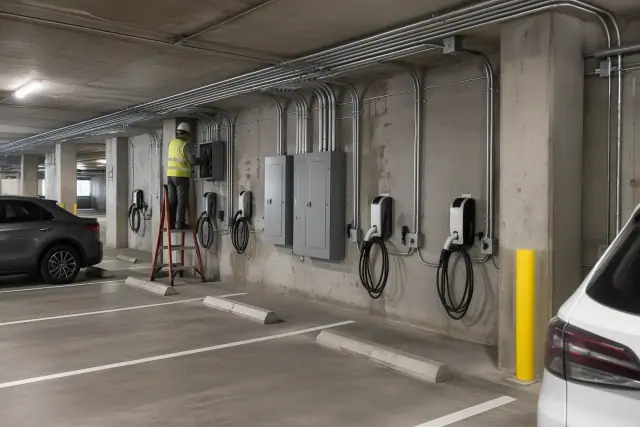
Overhead conduits and parking stalls during EV charger dedicated circuit installation in Mesa, AZ.

Managed Charging for Multiple Stations

Shared charging infrastructure requires more than repeating a residential circuit design. We assess the supply voltage, available capacity, parking arrangement, and how drivers will share charging access.

  • 208-volt three-phase service assessed on commercial properties
  • Single-phase 240-volt home installations distinguished from site power
  • 480-volt service and transformer needs assessed at larger DC charging sites
  • Networked charging configured to stagger or share available load
  • Submetering or cost allocation planned for shared parking
Request Estimate
Equipment, Capacity, and Cost

Choosing Your EV Charging Setup

The best fit starts with your charger's requirements and a practical route from the panel. We explain the electrical scope, the connection options, and the property conditions that affect installation so you can make an informed decision.

Capacity Checked Before Work Begins

We calculate the proposed charging load alongside existing appliances and air conditioning before recommending a circuit. A 100-amp or 125-amp service does not automatically need replacement; the load analysis determines whether it can accommodate the charger or needs an upgrade to 200 amps.

Circuit Routing Planned for Mesa Properties

Garages in Las Sendas, Red Mountain Ranch, and Alta Mesa can present different paths from the panel to the parking space. We account for attic access, masonry block walls, and slab-on-grade construction when laying out the conduit route, including whether trenching or wall penetrations are necessary.

Fixed Quotes After an On-Site Evaluation

Straightforward dedicated circuit or NEMA 14-50 installations typically run $450 to $1,200 when the panel is close and service capacity is adequate. Hardwired work or installations involving longer conduit runs, trenching, or drywall work generally fall between $800 and $2,200. Panel upgrades are priced separately, and we provide a fixed quote after evaluating the site.

Start with the Electrical Supply

EV Charging Problems We Address

A tripped breaker or slow charging session can point to a circuit issue, an equipment fault, or a lack of available capacity. We inspect the electrical supply and charging connection to identify the cause before recommending circuit work, repair, or replacement.

Request an Evaluation

Shared Circuits and Repeated Trips

Garage outlets that also supply lights or tools are not a dedicated charging connection. A sustained EV load can expose an overloaded or undersized circuit, interrupting overnight charging. We check what the circuit serves and whether its wiring and breaker are appropriate for the charger.

Heat Along the Wiring Route

An undersized conductor on a 40-amp circuit can heat up during a six-hour charging session. Mesa summer temperatures above 100°F also make hot attics and unshaded exterior routes important design considerations. We evaluate conductor ampacity derating, including the temperature considerations described in NEC Table 310.15, when selecting the wiring.

Long Runs and Voltage Drop

Distance can change the conductor size needed between the panel and the charger. Runs exceeding roughly 75-100 feet may need to step up to 4 AWG copper, with the aim of keeping voltage drop under 3%. We assess the actual run and charging load before making that selection.

Older Panels with Limited Capacity

Many Mesa homes built before the mid-1990s have 100-amp main panels that already serve air conditioning, a pool pump, and household appliances. Adding a 40- or 50-amp EV circuit can exceed the available capacity. Full breaker slots, warm panels, or frequent trips warrant evaluation before another circuit is added.

Outdoor Connector and GFCI Faults

Monsoon-season moisture intrusion can corrode contacts on outdoor equipment, while worn connectors or a GFCI breaker that will not reset can stop charging altogether. We check breaker function and voltage at the connection before tracing the fault into the charger.

Too Many Chargers for the Available Service

Eight or ten fleet chargers running at full output together can overwhelm a site's electrical capacity. Networked load management can stagger charging or share power between stations. We plan that control alongside the available service and the vehicles' overnight charging needs.

From Evaluation to Charging

Our Dedicated Circuit Installation Process

Each job moves from a site evaluation to circuit design, installation, and verification. The scope accounts for the equipment requirements and any permit, utility, or inspection coordination the property needs.

01.

Inspect the Panel and Charging Location

We review the panel, existing appliances, proposed charger, and where the vehicle parks. The load calculation establishes available capacity, while the site inspection identifies garage access, attic access, and obstacles along the route.

02.

Choose the Connection and Circuit Route

We compare hardwired and compatible outlet-based charging, then plan conduit, conductor size, and breaker selection. Your vehicle, budget, future charging needs, and how long you expect to stay in the home help guide the connection choice.

03.

Confirm the Scope and Fixed Quote

We explain the proposed wiring path and identify work such as trenching, masonry penetrations, drywall access, or a panel upgrade. The fixed quote follows the on-site evaluation so the price reflects the actual installation.

04.

Coordinate Permits and Utility Work

For applicable projects, we handle the electrical permit through the City of Mesa Building Safety Division. A service upgrade may also involve Salt River Project or APS, depending on the service territory, and a temporary power shutdown during the panel swap.

05.

Install the Circuit and Charging Connection

We run the conduit and conductors, fit the selected breaker, and install the outlet or hardwired connection. GFCI protection, enclosure suitability, and any required disconnect are addressed as part of the electrical installation.

06.

Test Charging and Complete Inspection Steps

We verify the connection and charging output with a load test, then coordinate the required inspection steps for the project. Permit and inspection documentation provides a record of the work for your property.

Plan Your Charging Connection

Schedule an EV Circuit Evaluation

Ready to add home charging or resolve a problem with an existing connection? Mesa EV Chargers can evaluate your panel, charging equipment, and parking location, then provide a fixed quote for the electrical work.

Mesa Installation Questions

EV Charger Dedicated Circuit FAQs

Find answers about installation timing, permits, pricing, and choosing a circuit for your charging equipment. Your property's panel capacity and wiring route determine the final scope.

Call Our Electricians

New circuit runs, panel upgrades, and hardwired charger installations generally involve an electrical permit and inspection through the City of Mesa Building Safety Division. A simple outlet replacement on an adequately sized existing circuit may have different requirements. Mesa EV Chargers handles permits and inspection coordination for applicable work.

EV charging puts a sustained load on the breaker, wiring, and connection, so correct sizing and installation matter. Our licensed electricians evaluate the panel, select the electrical components for the equipment, and verify the installation with a load test. An improvised connection can create overheating and tripping problems that are not apparent before charging begins.

A standard dedicated circuit or NEMA 14-50 installation close to the panel typically takes half a day to a full day, including permit paperwork and a final load test. Longer conduit routes and masonry penetrations can add time. A panel upgrade often involves a full day of electrical work plus separate inspection scheduling, while commercial and multifamily projects are scoped individually.

A documented charging connection gives EV-owning buyers an installation they can have inspected and evaluated. We provide permit and inspection documentation for applicable jobs so there is a record of the work. The effect on a property's sale price depends on the buyer and market; the installation does not establish a specific increase in value.

A 30-amp circuit can add roughly 15-20 miles of range per charging hour, depending on the vehicle, and may suit lighter daily driving. Higher-capacity circuits can support higher-output compatible chargers, such as a 40-amp-output charger on a 50-amp circuit. A larger circuit alone will not increase charging speed beyond what the vehicle and charger can use.

A charger drawing 40 amps continuously calls for a 50-amp breaker, while one drawing up to 48 amps continuously calls for a 60-amp breaker under the continuous-load sizing approach. We confirm the equipment nameplate and the proposed charging setting before choosing the circuit. The conductor size and breaker must be selected together for the installation conditions.

Straightforward outlet-based or dedicated circuit installations typically cost $450 to $1,200 when the panel is nearby and has adequate capacity. Hardwired installations or work involving longer conduit runs generally range from $800 to $2,200. Trenching, wall access, and protective equipment affect the scope, and a needed panel upgrade is quoted separately. We provide a fixed quote after an on-site evaluation.

Yes, the route matters when conductors pass through a hot attic or along an unshaded exterior wall. Temperature-related ampacity adjustments may require different wire sizing than an otherwise similar installation in cooler conditions. We evaluate those conditions along with charging load and run length before selecting conductors.

A NEMA 14-50 outlet works with compatible plug-in charging equipment and offers flexibility if you change chargers. Hardwiring removes the plug-and-receptacle connection, which can provide a cleaner installation with one fewer connection point. We compare both options during the evaluation based on your equipment, budget, and plans for the property.

We perform a load calculation that accounts for the home's existing appliances, HVAC, and proposed charging demand. Available breaker slots alone do not establish that the service can support another sustained load. The analysis determines whether the existing service has room or whether a panel or service upgrade belongs in the project scope.

Yes, we discuss likely vehicle changes and additional charging needs before choosing the circuit and conduit route. Where appropriate, planning a 60-amp circuit instead of a 40-amp circuit can avoid repeating conduit or trenching work for a later equipment upgrade. A second charging point still needs its own capacity assessment and electrical design.

Shared installations need planning for available service capacity, charger access, and how electricity costs will be allocated. We coordinate with property managers and HOA boards when routes pass through shared electrical rooms or common areas. Networked load management and submetering or cost allocation may form part of the design.

We first check breaker function, supply voltage, and the outlet or hardwired connection so an electrical fault is not mistaken for a failed charger. A damaged cord, contactor, or termination may be repairable, while repeated control-board failures or an out-of-production unit may favor replacement. When charging needs change, we also assess circuit upgrades, including moving a 30-amp setup to 40 or 50 amps where the electrical design supports it.