Proudly serving Mesa, Gilbert, Chandler, Tempe, Queen Creek, Scottsdale & surrounding areasCall or Text 24/7: 602-559-1623
Aerial drone photo of residential neighborhoods and desert vegetation in Mesa, AZ.

Hardwired EV Charger Installation in Mesa, AZ for Direct Connection Level 2 Charging Systems

Mesa EV Chargers installs hardwired EV chargers for homes and businesses in Mesa, AZ. We add dedicated circuits, evaluate electrical panels, and upgrade capacity when a property needs it. Our work includes garage charging, Tesla Wall Connectors, and commercial charging infrastructure. Each installation starts with your panel, parking location, and vehicle requirements.

Mesa garages can stay above 110°F for weeks between June and September, putting extra stress on outlet connections. A hardwired charger removes the removable plug connection from your daily charging routine. Our licensed electricians assess the electrical load, plan the wiring route, and coordinate permitting. Contact us to discuss a setup suited to your property and regular charging needs.

We use listed charging equipment and test each installation before the job is complete. Your itemized quote explains the electrical work and any additional panel or routing needs.

Mesa EV Chargers provides hardwired EV charger installation in Mesa and nearby Tempe, Chandler, Gilbert, Queen Creek, and Apache Junction.

★ ★ ★ ★ ★4.9/5 Customer Rating · 19 Years of Electrical Experience · 2,000+ Charging Projects Completed · Licensed, Bonded & Insured · Serving Homes, Fleets & Businesses

Hardwired EV Charging Options & Benefits

What Is a Hardwired EV Charger?

A hardwired EV charger connects to your electrical panel through a dedicated circuit without a plug or receptacle between them. The fixed connection supplies the charger where you park, making it a practical option for routine home or workplace charging.

Level 2 charging uses a 240-volt supply. Our hardwired installations can use circuits up to 60 amps, with the circuit and charger output selected for the vehicle and the property's available electrical capacity.

An outlet introduces an additional connection that can loosen as plug contacts wear. Hardwiring removes that interface, reducing the connection issues associated with repeated plugging, unplugging, and heat cycling.

Benefits of a Direct-Wired Connection

For daily charging, a fixed connection offers practical advantages over a removable plug. We pair those benefits with electrical planning that fits your building and parking space.

  • No receptacle contacts to loosen through repeated use
  • No plug prongs to wear out during regular charging
  • Removal of the outlet interface where arcing can occur
  • Support for higher continuous charging output
  • A dedicated circuit sized for the charging load
  • Fewer exposed plug contacts affected by dust and humidity
  • Charging equipment placed for your garage or driveway
  • Load management options for multiple charging points
Charging and Electrical Work

EV Charger Installation & Electrical Services

Charging projects range from a garage circuit to coordinated installations for a workplace or apartment property. We install equipment, address panel capacity, and troubleshoot existing charging connections.

Residential Hardwired Charger Installation

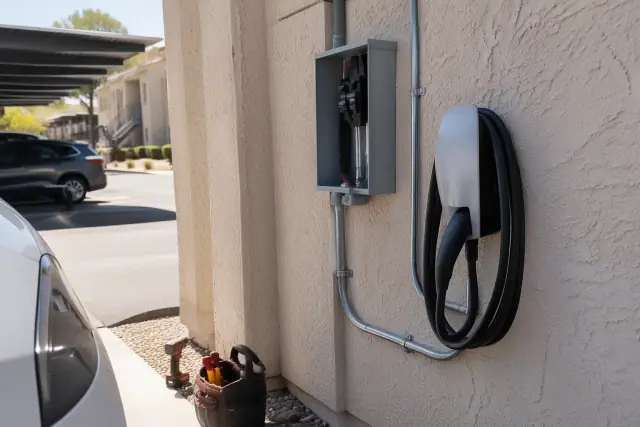
Hardwired EV charger installation on a stucco exterior wall in Mesa, AZ.

We connect home chargers to dedicated circuits from the main electrical panel. For single-family properties in Dobson Ranch and Val Vista, the work commonly centers on a garage-mounted unit and a wiring route suited to the parking space.

Request Estimate

Tesla Wall Connector Installation

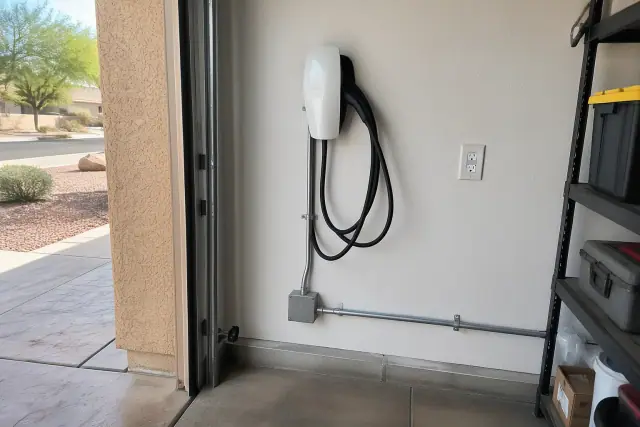
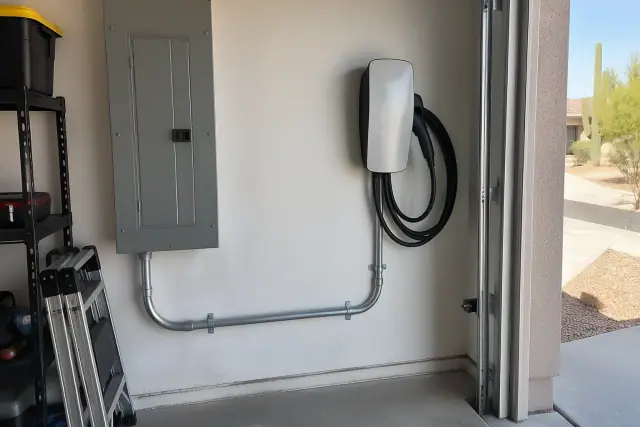
Tesla Wall Connector installed in a residential garage in Mesa, AZ.

We install Tesla Wall Connectors on dedicated circuits, following the manufacturer's wire-sizing specifications for up to 48-amp output. Panel capacity and the circuit route guide the installation, so the electrical work matches the equipment.

Request Estimate

Electrical Panel Evaluation and Upgrades

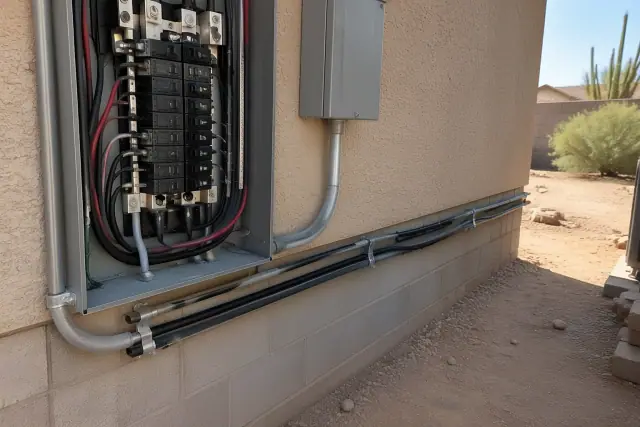
Electrical panel evaluation and upgrade for an EV charger installation in Mesa, AZ.

We assess existing electrical demand before adding a charging circuit. When a panel needs an upgrade from 100 amps to 200 amps, we scope that work separately and coordinate the service change with Salt River Project or Arizona Public Service.

Request Estimate

Workplace and Commercial Charging

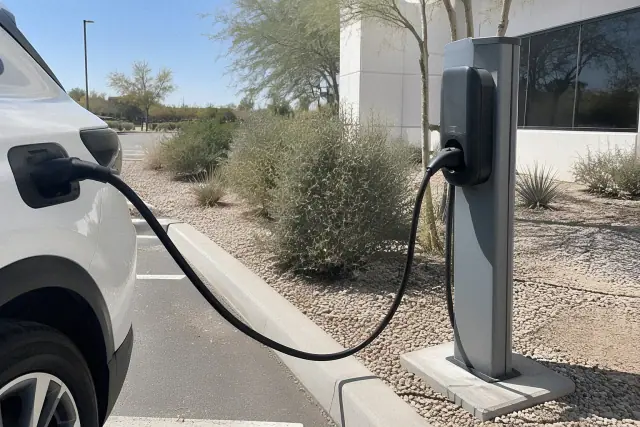
EV charger installation at a commercial office building exterior in Mesa, AZ.

We plan charging infrastructure for workplaces and businesses with multiple charging points. A capacity study helps establish what the existing service can support before additional circuits or commercial panel upgrades are selected.

Request Estimate

Apartment and Condo Charging

Hardwired EV charger installation on a stucco exterior wall in Mesa, AZ.

We work with property managers and HOA boards through the approval process for multi-unit charging. Installations can include submetering so individual unit owners' charging use can be billed accurately.

Request Estimate

Charger Repair and Troubleshooting

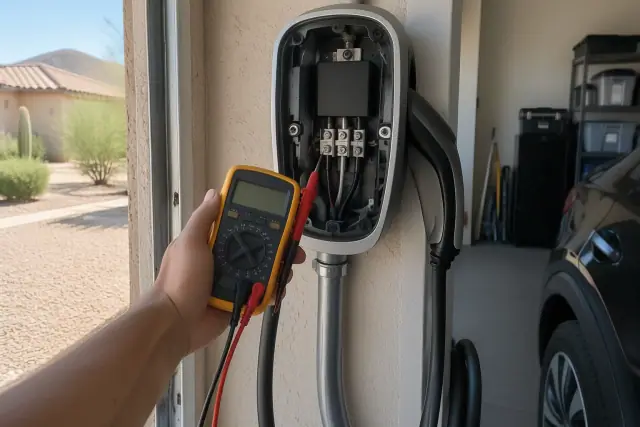
Technician using a multimeter for hardwired EV charger troubleshooting in a Mesa, AZ garage.

We diagnose wiring, breaker, and connector problems, including faults on chargers installed by another contractor. The assessment looks at the electrical connection and reported symptoms before corrective work is recommended.

Request Estimate
Equipment and Placement

Charging Setups for Different Properties

The distance from the panel, exposure to weather, and number of vehicles shape the installation. These options address common garage, driveway, detached-building, and business charging needs.

Hardwired EV charger installation on a garage wall in Mesa, AZ.

Garage-Mounted Home Charging

A garage installation usually brings a new circuit from the main panel to a wall-mounted charger. We assess the existing service and route before setting the scope.

  • Wall-mounted equipment beside the parking area
  • Panel capacity checked against household demand
  • Dedicated wiring for the charging equipment
  • Conduit route planned from panel to charger
  • Electrical inspection and testing at completion
Request Estimate
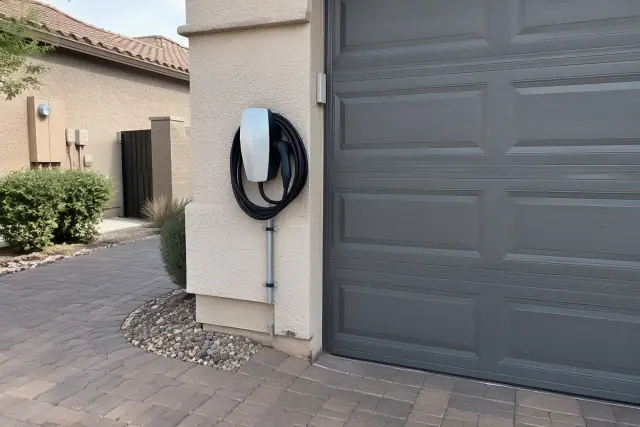
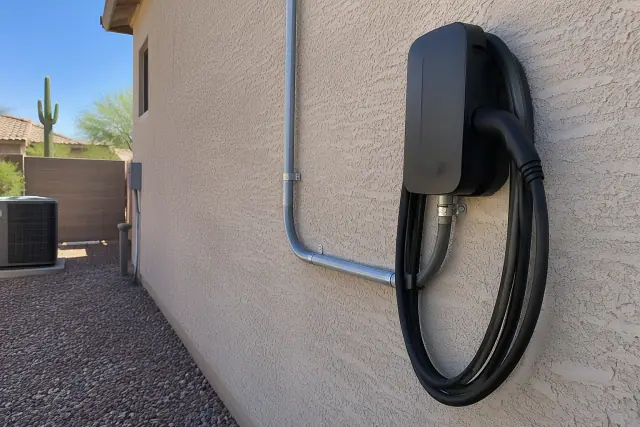
Wall-mounted EV charger and heavy cable installed on a residential driveway wall in Mesa, AZ.

Outdoor and Driveway Charging

An exposed charging location needs equipment and conduit chosen for sun and weather. We account for exterior routing and the conditions around the mounting point.

  • Weatherproof, UV-rated conduit for outdoor runs
  • NEMA 3R or 4 enclosures on outdoor equipment
  • Sun exposure considered when choosing components
  • Exterior wall or underground conduit routing
  • Monsoon drainage considered for trenching
Request Estimate
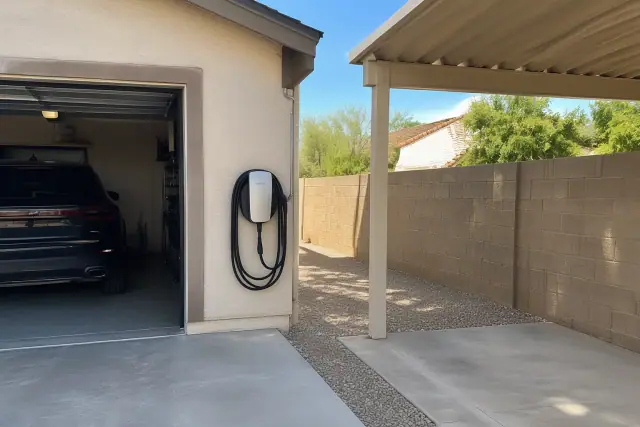
Hardwired EV charger installation for a detached garage and carport in Mesa, AZ.

Detached Garage and Carport Charging

Detached parking areas can require longer conduit runs or trenching. We plan the path around the property layout, Arizona's expansive soil, and drainage conditions.

  • Underground routing where the layout requires it
  • Schedule 40 PVC conduit for trenching projects
  • Run length included in conductor selection
  • Soil and drainage reviewed along the trench route
  • Trenching scope identified in the installation quote
Request Estimate
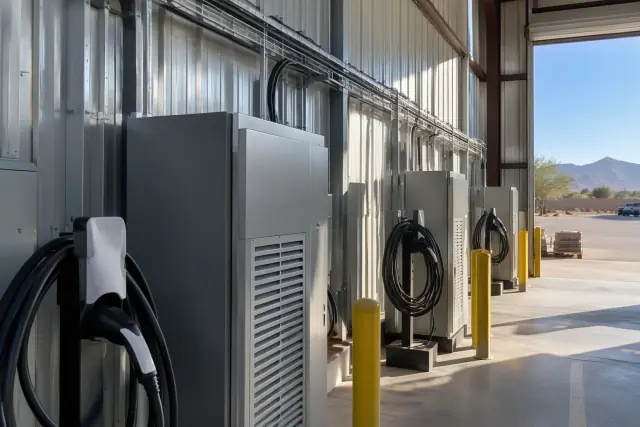
Commercial EV charger installation with load management inside an industrial warehouse bay in Mesa, AZ.

Fleet Charging with Load Management

Delivery and service fleets may need several charging points within an existing electrical service. We design load management to stagger sessions across available capacity.

  • Multiple charging points for business vehicles
  • Assessment of available commercial panel capacity
  • Charging sessions staggered across the available load
  • Dedicated circuits planned for the equipment
  • Utility service upgrade needs evaluated during planning
Request Estimate
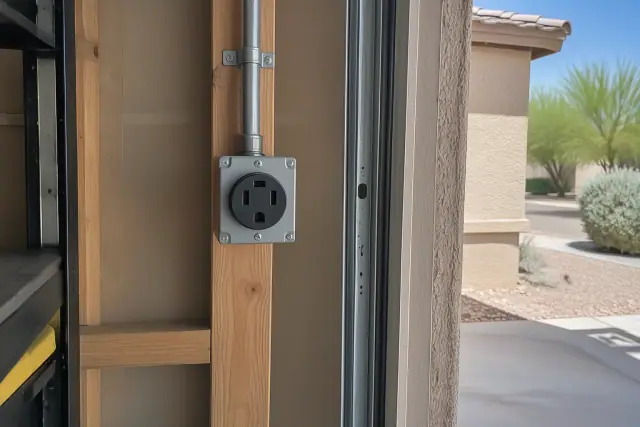
NEMA 14-50 EV charger outlet installed on a residential garage wall in Mesa, AZ.

NEMA 14-50 Outlet Charging

For customers who prefer a removable connection, we also install NEMA 14-50 receptacles. This is a separate outlet-based option to compare with hardwiring.

  • Dedicated 50-amp circuit for the receptacle
  • GFCI protection included for the outlet installation
  • Receptacle selected for the charging application
  • Compatibility considered for the charger and vehicle
  • Outlet flexibility for customers using multiple EV brands
Request Estimate
What to Look For

Choosing Your Hardwired Charger Installer

A useful installation proposal explains the panel assessment, wiring route, equipment selection, and inspection process. Our approach combines electrical sizing, attention to Mesa's heat, and a clear breakdown of the work.

Licensed Electrical Planning

Our licensed electricians size conductors and conduit with NEC 625 and NEC 210.19 requirements in mind. We select 6 AWG or 8 AWG copper conductors according to amperage and run length, rather than treating every installation as the same circuit.

Components Chosen for Arizona Heat

We account for sustained heat when selecting conduit and connector-rated components. On unshaded south- and west-facing walls, equipment surfaces can become much hotter than the surrounding air, making the installation location part of the electrical plan.

Itemized Installation Quotes

We provide a firm quote after reviewing the panel and charger location. Run length, wire gauge, trenching, and drywall work affect labor, so the estimate identifies the work your property requires.

Conditions We Assess

Solving Common EV Charging Problems

A new charger can reveal limitations in an existing panel, wiring route, or outlet connection. We assess those conditions before installation and troubleshoot faults when an existing setup is no longer charging reliably.

Request an Assessment

Heat-Worn Plug Connections

Mesa's summer asphalt temperatures regularly climb past 150 degrees, illustrating the heat around outdoor parking areas. At homes in Las Sendas or Red Mountain, charging four to five nights a week can add repeated thermal stress to a plug connection. Hardwiring removes that wear point.

Limited Capacity in Older Panels

Many Mesa homes built before 2005 have 100-amp or 125-amp panels that need evaluation before a 40-60 amp charging circuit is added. Original service in homes from the 1970s and 1980s deserves particular attention; a load calculation determines whether an upgrade is needed.

Nuisance Tripping and Fault Codes

Undersized conductors and loose breaker-lug connections are common issues on our service calls. We inspect the wiring and connections to identify the cause of recurring trips or charger faults.

Long Runs to Detached Parking

A detached garage or driveway charger may need a longer route from the main panel. We account for run length in conductor selection and include voltage-drop testing when checking the completed installation.

Heat and Moisture Along the Wiring Route

Undersized conduit can trap heat, while damaged outdoor connections may admit water during monsoon weather. We review conduit and enclosure conditions to address these installation problems.

Too Many Chargers for Available Capacity

Adding several charging circuits can exceed the capacity of a commercial building's existing service. We evaluate total demand and use load management where appropriate to distribute charging sessions across available capacity.

From Assessment to Testing

Our Hardwired EV Charger Installation Process

Each project moves from electrical assessment and routing through permitting, installation, and testing. We explain capacity or access issues as part of the scope, so you understand what the work involves.

01.

Assess the Panel and Electrical Load

We calculate the building's existing demand and check available capacity for EV charging. Household loads such as HVAC and water heating are considered before we recommend a circuit or panel upgrade.

02.

Plan the Route and Confirm the Quote

We review the panel-to-charger distance and whether the route involves exterior conduit, trenching, or drywall work. The itemized quote clarifies the installation scope, permit fees, inspection coordination, and whether the charger is supplied separately.

03.

Coordinate Permitting

We obtain the electrical permit through the City of Mesa Building Safety Division. Where a service upgrade is part of the project, we also coordinate the necessary utility involvement.

04.

Size and Install the Dedicated Circuit

We size the charging circuit at 125% of the charger's continuous load and install a breaker dedicated to the charging equipment. Conductor selection also accounts for output, run length, and the manufacturer's requirements.

05.

Route Conduit and Connect the Charger

We install conduit along the agreed route and make the fixed connection to the charging equipment. For detached garages and driveway locations in Eastmark or Superstition Springs, this can include a trenching route planned around soil and drainage.

06.

Complete Inspection and Safety Testing

We coordinate the City of Mesa electrical inspection and inspect the work to applicable NFPA 70 requirements. Voltage-drop and ground-fault testing are part of our final checks before we consider the installation complete.

Plan Your Charging Setup

Request a Hardwired Charger Estimate

Tell us where you park, which charger you plan to use, and where the electrical panel is located. Mesa EV Chargers will assess the installation requirements and explain the scope before work begins.

Your Charging Questions

Hardwired EV Charger Installation FAQs

These answers cover installation costs, panel requirements, equipment choices, and ongoing care. For a property-specific recommendation, contact us to discuss your panel and preferred charger location.

Call Our Experts

A straightforward installation typically costs $450 to $1,200 when the panel has capacity and the run to the charger is under 50 feet. More complex installations involving longer conduit routes, trenching, or detached garages generally range from $650 to $1,800. We assess your panel and charger location before providing a firm quote.

For daily Level 2 charging, we generally recommend hardwiring because it removes the plug interface that can wear through repeated heat cycling. It also supports higher continuous amperage without the connection resistance a receptacle can introduce. An outlet-based setup remains an option when removable-plug flexibility matters to you.

Most residential electrical installations in Mesa range from $450 to $1,800, excluding a charger purchased separately. A necessary panel upgrade adds to that cost because it involves a panel swap and utility coordination. Review permit fees, inspection coordination, and equipment supply in the itemized quote.

EV charging draws power continuously for hours, so the circuit must be planned for that sustained load. A dedicated circuit avoids sharing that demand with other equipment and lets us size the breaker and conductors for the charger. We review the applicable charging requirements during the electrical assessment.

That depends on the panel's available capacity after existing household loads are accounted for. We perform a load calculation before recommending an upgrade, rather than deciding from the panel rating alone. If the existing service cannot support the charging load, we include the required panel work in the project scope.

Many single-family garage installations are typically completed in a single day. A longer conduit route, trenching, or a panel upgrade changes the scope. We discuss those conditions and inspection coordination when planning your project.

Level 1 charging uses a standard 120-volt outlet and adds roughly 3-5 miles of range per hour. Level 2 typically adds 20-40 miles of range per hour, depending on the vehicle and charger output. Actual performance follows the equipment and the capacity of the installed circuit.

Yes, we install outdoor and driveway charging equipment with enclosures and conduit suited to the location. Direct sun exposure, exterior routing, and monsoon drainage are considered during planning. Detached parking areas may require an underground conduit route.

Hardwired systems typically last 15-20 years with minimal service needs. Removing the removable plug avoids prong wear and a connection that can loosen with use. Equipment condition and periodic checks still matter throughout the installation's life.

We recommend an annual visual inspection of the connections and conduit, particularly after monsoon season. The inspection looks for corrosion or water intrusion before it leads to a charging fault. Recurring trips or charger fault codes are reasons to request troubleshooting.

Yes, we diagnose and correct wiring, breaker, and connector issues on equipment we did not originally install. We also troubleshoot problems arising from our own installation work. The next step is an assessment of the fault and the existing electrical connection.

We coordinate with Salt River Project and Arizona Public Service on rebate paperwork where applicable. Whether a particular installation qualifies depends on the applicable program. We can discuss the paperwork relevant to your project during planning.

Yes, we install charging infrastructure for workplaces, fleets, apartments, and condos. Commercial projects may need a capacity study and load management, while multifamily work can involve HOA approval and submetering. We plan the electrical scope with the business owner or property manager.